
Planning a spring school carnival in a tight space starts with a simple question: what needs room, and what can stay compact? The best school carnival ideas are not always the biggest ones. In a small gym, cafeteria, or blacktop corner, smart event rentals for small spaces matter more than a long list of attractions.
Think in zones before you think in games. A clean layout gives guests a place to enter, a place to play, and a place to pause without crowding the whole event. That makes spring school carnival planning feel manageable, even when the footprint is limited.
Spring school carnival planning starts with the floor plan
Start by drawing the available space as a simple rectangle. Then mark the edges you cannot use, like doors, serving tables, or walk paths. That lets you see how much open room remains for activity stations.
With limited space, the goal is not to fit everything. The goal is to fit enough variety without creating a jam. A few compact stations often work better than one crowded cluster.
Place the largest item first. After that, arrange smaller games around it and leave a clear lane through the middle or along one side. Guests should be able to move without weaving through every station.
Use one item to define the entry point
An 8' High Hinge Booth can help you create a clear carnival start line. It gives the event a fixed point for a game booth, ticket spot, or prize area. In a small school setting, that kind of structure keeps the rest of the room from feeling random.
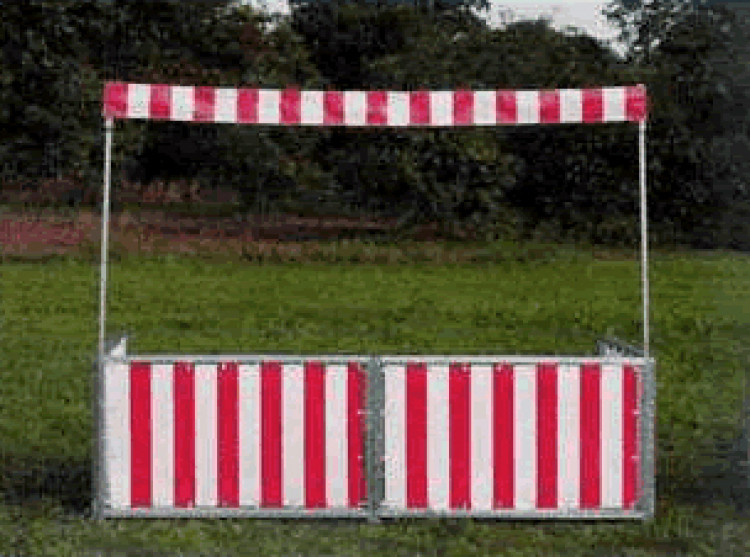
Use the booth where guests first arrive, or along a wall that needs definition. It works well when you want one station to feel official and easy to find. A booth also helps separate active play from waiting areas.
If you are building a line of activities, let the booth anchor the first stop. Then place smaller games nearby. That keeps the carnival readable from across the room.
Choose compact games that fit into narrow gaps
Compact games are the backbone of event rentals for small spaces. They fill awkward corners and narrow edges without eating the whole floor. That makes them useful when the school wants variety, but the room has limits.
The best school carnival ideas for a tight site usually have two qualities. They should be easy to understand, and they should not demand a huge footprint. That is where tabletop and stand-alone games shine.
Plinko works well as a compact stop
Plinko gives guests a familiar game with a simple setup. It is a strong choice for a small carnival because it does not need power. It also fits neatly into a game row without stealing attention from every other station.
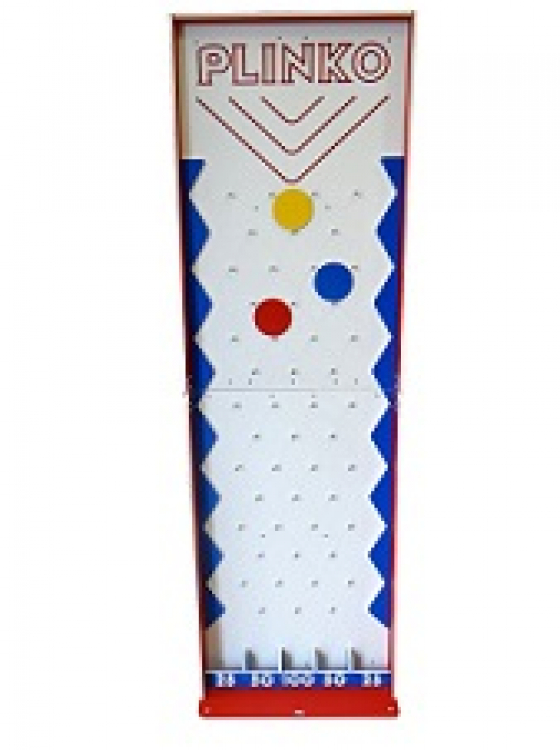
Use Plinko when you want quick turnover in a small footprint. It works well beside a booth or prize area. That makes it useful for a PTA that needs a few strong attractions instead of many bulky ones.
If your space is very tight, keep Plinko against a wall or in a corner lane. That preserves the center of the room for movement. It also helps guests see the game without blocking the path.
Mini Hoop adds a fast, active option
Mini Hoop is a good fit when you want a simple challenge that feels active. Guests shoot for two by making a set number of baskets or the most baskets in a set time. It includes a mini basketball, so the game stays self-contained.
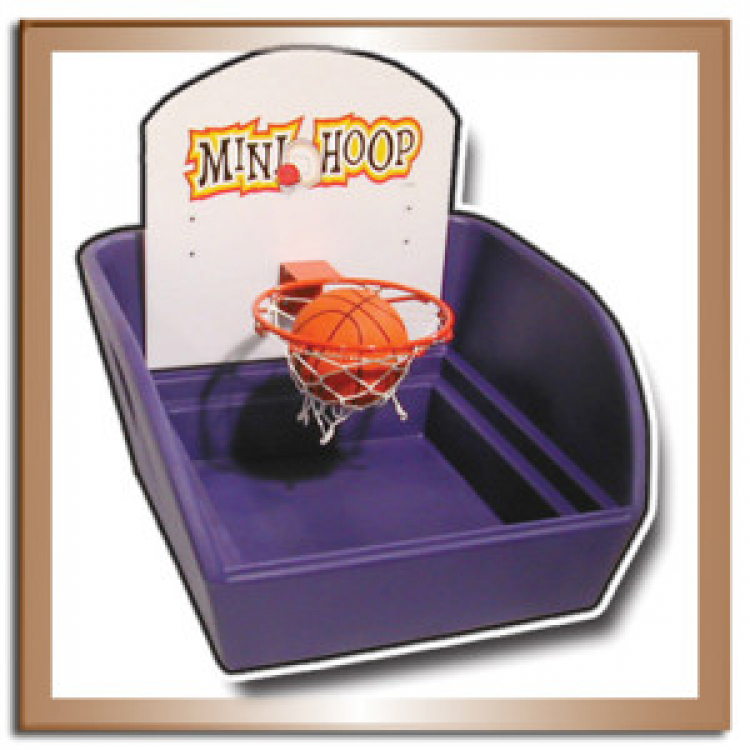
This kind of game works well in a narrow aisle or side section. It gives students something physical to do without requiring a large area. That is valuable when the carnival needs several stops in a single classroom or gym edge.
Mini Hoop also pairs nicely with a booth or prize station. The setup feels complete without spreading across the room. For spring school carnival planning, that economy of space matters.
Reserve one larger attraction and give it room to breathe
Small games are helpful, but one bigger attraction can give the carnival a focal point. The trick is choosing only one major piece and planning around it. In a limited space, that prevents the room from feeling overloaded.
That larger piece should sit where it can be seen without blocking everything else. You want guests to notice it immediately. You do not want it to force traffic into a bottleneck.
Use the slide only if the space can truly support it
18 Ft. Slide needs the most careful planning. Its footprint is 15x18x30, and it needs one circuit. If you have a long, open area and a matching power source, it can become the main attraction.
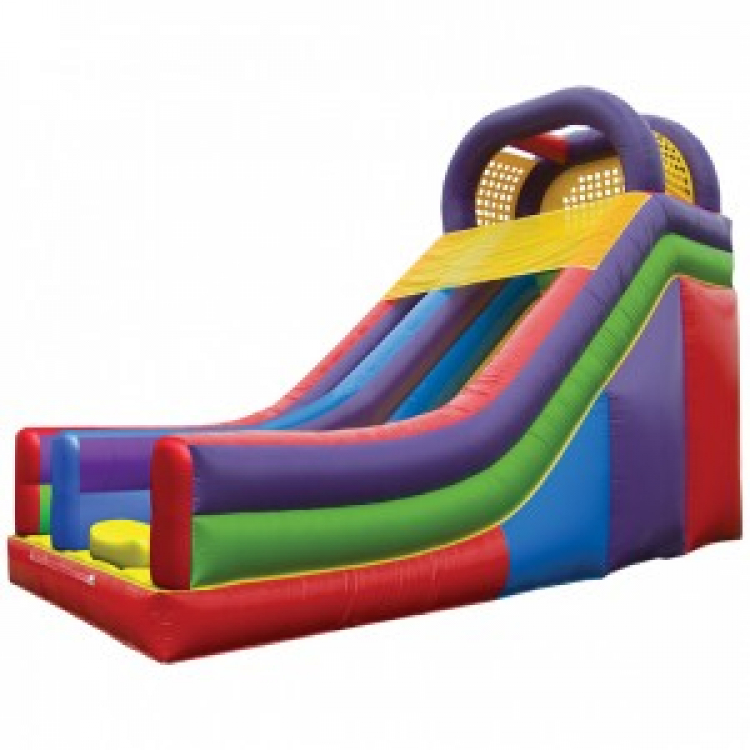
Because the slide uses more room than the small games, place it first in your layout sketch. Then build the rest of the carnival around what remains. That keeps the event from becoming a patchwork of squeezed stations.
If the room is too tight, skip the slide and use smaller items instead. A single large piece can work well, but only when it leaves enough circulation space. In spring school carnival planning, blank space is often a feature, not a flaw.
Choose long-format attractions only when the lane is available
Lego Obstacle uses a 38x10x12 footprint. That makes it a better fit for a long rectangle than for a crowded square room. If your site has a hallway-sized strip, gym edge, or open outdoor section, this kind of piece may make sense.
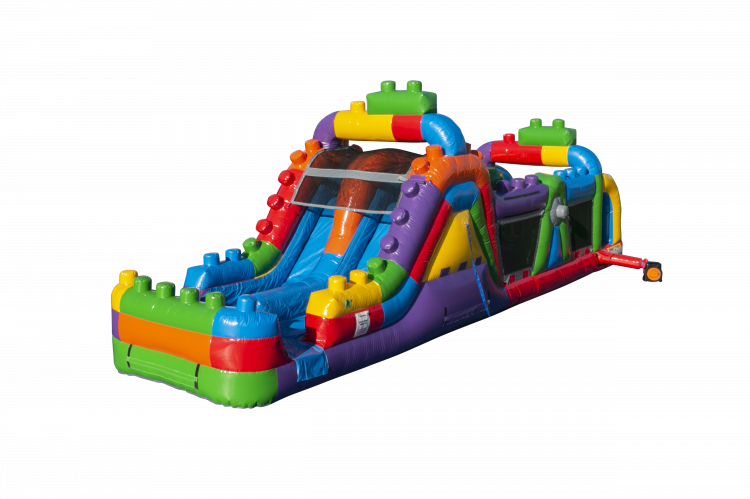
Use it only when the footprint matches the available lane. A long attraction can be a strong draw, but it needs a clear run of space. For a small carnival, the math is simple: if the lane is not there, choose something shorter.
This is where a floor plan saves time. Mark the long lane before you pick the final mix. That keeps the rest of your school carnival ideas realistic.
Build the event around easy movement, not just easy setup
Guests feel the difference between a packed room and a thoughtful one. Movement is what makes small spaces workable. If people can see where to go next, the event feels larger than it is.
Line the stations around the perimeter whenever possible. That leaves the center open for walking, waiting, and turning around. It also prevents one attraction from blocking another.
Mix standing games with one anchor piece
A practical mix might include the booth, Plinko, Mini Hoop, and one larger feature. That gives you variety without crowding the room. Each station serves a different purpose in the layout.
The booth marks a destination. Plinko gives you a simple game. Mini Hoop brings motion. The slide or Lego Obstacle gives the event a bigger visual point, if the room can handle it.
That balance helps the event feel full without feeling packed. It also gives you flexibility if one section of the building is narrower than expected. The layout can flex around the space you actually have.
Keep power needs in mind early
Only the 18 Ft. Slide lists a circuit need, and it calls for one circuit. The other supported items here show zero circuits needed. That matters when outlets are limited or when you need to place activities away from powered zones.
Plan the powered item first if you use it. Then fill the remaining space with games that do not depend on electricity. That can make the layout simpler for a school carnival with tight utility access.
It also helps to group the no-power games together. That can reduce the number of separate setup areas you need to manage. In a limited space, fewer clusters usually work better than many scattered ones.
Use space-saving event tips to decide what to skip
One of the hardest decisions in spring school carnival planning is leaving something out. Yet every skipped item gives the room more breathing space. That often improves the event more than adding another station would.
Ask three questions before adding a piece. Does it need a long footprint? Does it need power? Does it force a queue where you do not have one? If the answer is yes more than once, it may not belong in a small layout.
The supported items here already give you a workable mix. You have a booth for structure, two compact games, and two larger options. That is enough to build a strong carnival without overfilling the site.
If the room is especially tight, lead with the booth, Plinko, and Mini Hoop. Add the slide only if the footprint and circuit work. Consider the Lego Obstacle only if the long lane exists.
That is the core of good event rentals for small spaces. Use the space you have, not the space you wish you had. Then let the layout support the carnival instead of fighting it.
Make the final layout decision before you reserve anything
Before you commit, sketch the room one more time. Place the largest item first, then the booth, then the smaller games. If the plan still feels open, you have a workable carnival.
For a quick test, imagine a guest walking from the entrance to the prize stop. If that path crosses every attraction, the room is too crowded. If the path stays clear, your layout is probably strong.
That final check helps PTO and PTA planners avoid guesswork. It turns school carnival ideas into a space plan. From there, you can choose the mix that fits your building best.
If you are ready to move forward, start with the floor sketch and mark your largest rectangle first. Then compare it to the booth, Plinko, Mini Hoop, the 18 Ft. Slide, and the Lego Obstacle before you decide what to include.